Pilgrimage and the four species
Torah text: Stated in the Five Books of Moses.The Torah commands taking four species and rejoicing before God seven days. In the Temple the lulav was taken all seven days.
סוכות
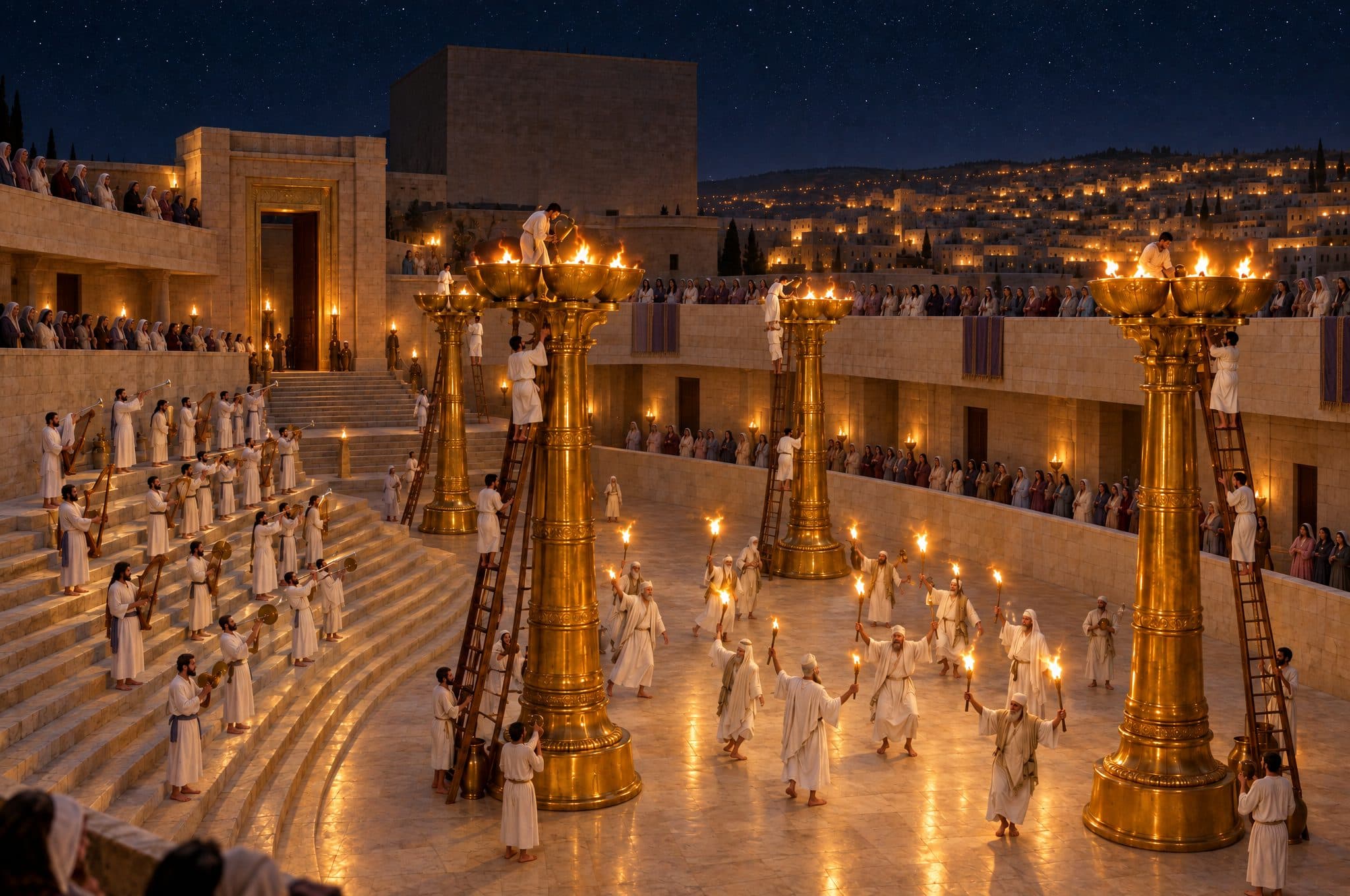
The same model, lit for Sukkot. Highlighted areas carry the festival's rites.
The Torah commands taking four species and rejoicing before God seven days. In the Temple the lulav was taken all seven days.
Each morning a golden flask was filled at the Shiloach spring and carried up through the Water Gate. The priest poured water into one silver bowl on the altar and wine into the other. The people called to him to raise his hand, so everyone could see.
Tall willow branches were cut at Motza below Jerusalem and stood around the altar, their tops bent over it. Each day the people circled the altar once, and seven times on the seventh day.
At night, golden lamp-stands were lit in the Women's Court with wicks made from the priests' worn garments. There was no courtyard in Jerusalem not lit by them. Pious men danced with torches, and Levites played on the fifteen steps. The Mishnah says: whoever has not seen it has never seen rejoicing.
The festival offerings begin with thirteen bulls on the first day and descend by one each day to seven: seventy in all. The Talmud reads the seventy as offered on behalf of the seventy nations of the world.
Zechariah sees all the nations going up to Jerusalem year by year to keep Sukkot, and links the festival to rain for the whole world.
וְהָיָה כָּל־הַנּוֹתָר מִכָּל־הַגּוֹיִם הַבָּאִים עַל־יְרוּשָׁלִָם וְעָלוּ מִדֵּי שָׁנָה בְשָׁנָה לְהִשְׁתַּחֲוֺת לְמֶלֶךְ ה׳ צְבָאוֹת וְלָחֹג אֶת־חַג הַסֻּכּוֹת׃
And it shall come to pass, that every one that is left of all the nations that came against Jerusalem shall go up from year to year to worship the King, the LORD of hosts, and to keep the feast of tabernacles.
Sukkot is kept in the sukkah and with the four species. Circling the synagogue with the lulav (hoshanot) and the willow of Hoshana Rabbah recall the Temple's willows.