Year by year
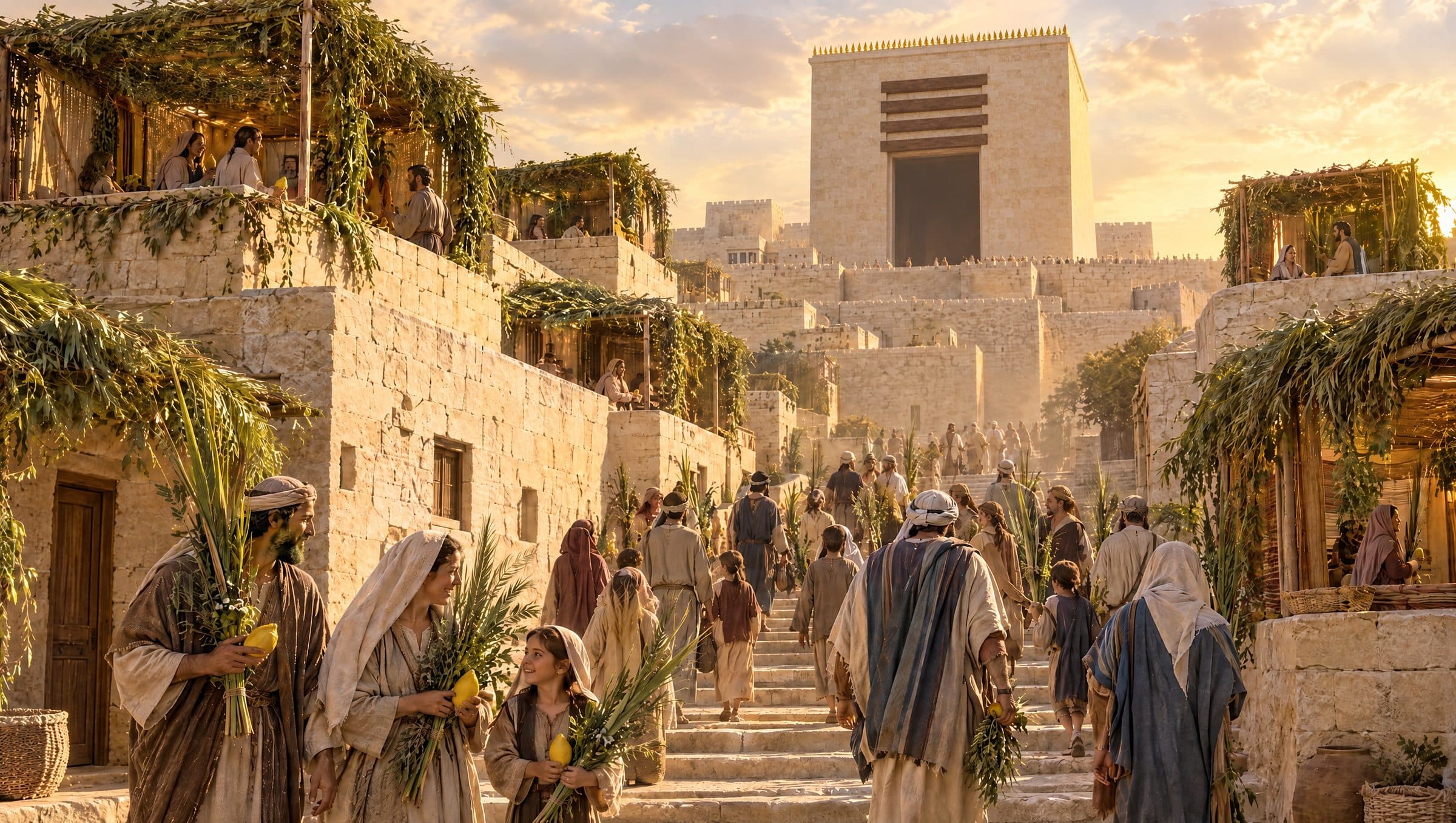
Tanach prophecy: Stated in the Prophets or the Writings.The nations go up to Jerusalem every year to worship and to keep Sukkot. Of all the festivals, it is the one given a universal future.
חג הסוכות
וְהָיָה כָּל־הַנּוֹתָר מִכָּל־הַגּוֹיִם הַבָּאִים עַל־יְרוּשָׁלִָם וְעָלוּ מִדֵּי שָׁנָה בְשָׁנָה לְהִשְׁתַּחֲוֺת לְמֶלֶךְ ה׳ צְבָאוֹת וְלָחֹג אֶת־חַג הַסֻּכּוֹת׃
And it shall come to pass, that every one that is left of all the nations that came against Jerusalem shall go up from year to year to worship the King, the LORD of hosts, and to keep the feast of tabernacles.
The nations go up to Jerusalem every year to worship and to keep Sukkot. Of all the festivals, it is the one given a universal future.
The same chapter says that God will be King over all the earth, and His Name one. The verse closes the Aleinu prayer, recited three times a day.
Zechariah ties the pilgrimage to rain. Sukkot was when the Temple prayed for the year's rain, with water poured on the altar.
The Torah's Sukkot offerings total seventy bulls over seven days. The Talmud reads them as offered on behalf of the seventy nations of the world.
Zechariah 14 also speaks of war and judgement against nations that attack Jerusalem. This site does not identify any modern people with those verses. Jewish tradition reads the chapter as a vision of the end of days, and its last word is worship and blessing for all nations who come.